
Sponsored by


 So, What Actually Happened?
Sunday morning the headline machine was quiet but the operating layer kept shipping. Merck signed a $1 billion AI partnership with Google Cloud, turning Friday's Bristol Myers-China pharma signal into a two-vendor pattern over one weekend. IREN closed a $3 billion convertible notes round so a Bitcoin miner can pivot into the AI data-center business, naming the capital-markets bridge between two cycles. We scanned 190,000 articles this week so you don't have to. Meanwhile Freshworks shipped its agentic IT operations stack and Emerson rolled out AspenTech AVA for industrial workloads, proving the agent and industrial layers do not wait for the model labs to finish their funding rounds.
The Bottom Line: When pharma writes a billion-dollar cloud cheque on a Saturday, when a Bitcoin miner borrows $3B to become an AI landlord, and when two industrial and IT mid-market vendors ship agent stacks the same weekend, the AI economy is not in a pause. It is consolidating its operating floor. The strategy lead who walks into Monday with a named owner per workload-layer runs the next quarter. Everyone else is reading from a January slide.
The full software lifecycle. Now in the age of AI.

WeAreDevelopers World Congress comes to San José, CA — September 23–25, 2026. 10,000+ developers, 500+ speakers, and the full software development lifecycle under one roof, in the heart of Silicon Valley.
Kelsey Hightower. Thomas Dohmke (fmr. CEO, GitHub). Christine Yen (CEO, Honeycomb). Mathias Biilmann (CEO, Netlify). Olivier Pomel (CEO, Datadog). The people actually building the tools you use every day — all on one stage.
AI, cloud, DevOps, security, architecture, and everything real builders ship with. Workshops, masterclasses, and the official congress party.
 The Tracks That Matter
1. Merck Bets $1B On Google Cloud As Pharma-AI Stack Forms
The cleanest pharma-cloud signal of the weekend sits on a CDO Magazine brief most CIOs will read as a vendor announcement. Merck just signed a $1 billion multi-year AI transformation deal with Google Cloud, naming the hyperscaler as the strategic AI partner across drug discovery, manufacturing, and commercial operations. Friday's Bristol Myers Squibb partnership with Hengrui in China named the cross-border pharma frame. Saturday's Merck-Google deal names the pharma-cloud frame. Two of the top five US biopharma names just put strategic AI bets on the table inside seven days.
The pairing matters because it sharpens what ”pharma AI strategy” actually means. BMS bought access to faster, cheaper Chinese discovery pipelines. Merck bought a single cloud spine to standardise discovery, manufacturing, and commercial AI on. The ”pick a hyperscaler for storage, we will figure out AI later” CIO posture that anchored most 2024-2025 pharma roadmaps just got two named counter-references in one week. The pharma vendor map for 2026 is not ”AWS for compute, in-house for IP” anymore. It is named, billion-dollar, multi-year, hyperscaler-anchored.
The strategic implication: the head of R&D, the CIO, and the chief medical officer now share a ”named AI-cloud strategic partner” line on the operating scorecard that did not exist on Monday. The question is no longer whether to commit. It is which hyperscaler, which workloads, and on what timeline before the next board cycle.
Here's what works: Ask the CIO and head of R&D together: do we have a named hyperscaler-anchored AI strategy across discovery, manufacturing, and commercial, with a billion-dollar-class scope and a multi-year horizon on the file? ”We are still piloting” was a 2024 answer that Merck and Bristol Myers just retired in the same week.
2. IREN Closes $3B Convertible As Bitcoin Miners Pivot To AI
The sharpest capital-markets signal of the weekend sits on a Block brief most CFOs will scroll past as crypto-adjacent commentary. IREN, a Bitcoin miner, just closed a $3 billion convertible notes offering so it can accelerate the pivot into AI infrastructure: GPU hosting, behind-the-meter power, and hyperscaler-grade data center capacity. The ”AI infrastructure is built by hyperscalers and a handful of named neoclouds” capital default just got its first named convertible-debt counter-reference at scale, and it came from the crypto adjacency.
The contrast that sharpens the read is what the same capital pool was building two years ago. The same megawatt allocations IREN spent 2022-2024 turning into Bitcoin hashrate are now being repointed at GPU racks, leased to AI workloads on long-tenor contracts. The convertible structure tells you the equity market still wants upside. The $3B size tells you the underwriters believe AI demand absorbs the supply. The ”neocloud market is four named names plus CoreWeave” framing some CIOs still carry into procurement is reading from a 2024 stack diagram while public-debt markets price a much broader supplier pool.
The strategic implication: the head of platform and CFO just gained a ”non-hyperscaler GPU supply” line on the procurement scorecard. For two years the answer was ”we either go hyperscaler or we go CoreWeave.” After IREN prints $3B in convertibles on the AI-infra thesis, the question becomes: for our top three GPU-heavy workloads, do we have a named third-party alternative quote, and where does the cost curve sit against the consensus hyperscaler renewal?
Here's what works: Ask the head of platform and CFO together: in our top three GPU workloads, do we have a named non-hyperscaler quote on the file with a cost-per-GPU-hour line and a power-availability commitment? ”AI capacity is a hyperscaler conversation” was a 2024 framing the convertible markets just put a $3B counter-reference against.
Try It Yourself
Your ads ran overnight. Nobody was watching. Except Viktor.

One brand built 30+ landing pages through Viktor without a single developer.
Each page mapped to a specific ad group. All deployed within hours. Viktor wrote the code and shipped every one from a Slack message.
That same team has Viktor monitoring ad accounts across the portfolio and posting performance briefs before the day starts. One colleague. Always on. Across every account.
3. Freshworks Plants Agentic Flag In Mid-Market IT Operations
The quietest enterprise software signal of the weekend sits on an Enterprise Times brief most heads of IT will read as a vendor product release. Freshworks unveiled an agentic IT operations stack inside Freshservice, naming the mid-market IT operations layer as the next agent-control-plane battleground. The ”agent control plane is an enterprise-only fight between ServiceNow, Salesforce, and the hyperscalers” framing that has dominated 2026 procurement discussions just got its first named mid-market counter-reference from a vendor sitting outside that triangle.
The pairing that sharpens the read is the consolidation pattern around the same week. The agent layer is no longer a single-tier conversation: incident.io is targeting PagerDuty in incident response, Decagon is recruiting product talent in conversational AI, Microsoft is shipping Copilot Cowork into more enterprises, and Freshworks is putting agentic IT ops directly into the mid-market. Four named vendors at four different points in the stack, all naming the agent layer as the operating surface in the same fortnight. The head of IT operations still waiting for ”the enterprise agent vendor to emerge” is going to discover the mid-market vendor already shipped the workflow under the existing renewal.
The strategic implication: the head of IT and CIO just gained a ”mid-market agent stack” line on the vendor scorecard. The question is no longer ”which enterprise AI vendor do we standardise on.” It is whether the agent capability we need is already inside a Freshservice, Zendesk, or HubSpot renewal that has been auto-extending for three years, and what that does to the consolidated agent strategy on file.
Here's what works: Ask the head of IT and CIO together: for our top three IT operations workflows, is there already an agentic capability inside a mid-market renewal we are paying for today? If yes, the consolidation thesis just changed. If no, build the named comparison before the next quarterly business review.
4. Emerson Ships Industrial AI Platform While Everyone Watches LLMs
The most underweighted industrial signal of the weekend sits on a Tech Intel Pro brief most operating execs will skim as plant-floor vendor news. Emerson rolled out AspenTech AVA, a named AI platform built for industrial process workloads: refining, chemicals, power, mining, and pharma manufacturing. The ”industrial AI is a 2028 conversation while everyone solves agentic enterprise first” framing that anchored most 2025 capex plans just got its first named operating-floor counter-reference from one of the largest automation incumbents on the planet.
The contrast that sharpens the read is what AspenTech has historically been. Process simulation, asset optimisation, manufacturing intelligence, dispatched into the most cost-sensitive plants on earth. When that base ships a named ”AI platform for industry” inside a Sunday news cycle, the framing is not ”we will pilot AI in a plant next year.” It is ”the simulation and optimisation stack already running the plant just became agentic.” Read alongside Merck's $1B Google Cloud deal on the same weekend, and the pattern is the same one running across pharma, IT ops, and now the plant floor: the operating layer of the AI economy is shipping while the headline layer argues about funding rounds.
Here's what works: Ask the COO and head of operations together: for our top three high-margin physical workflows, do we have a named industrial-AI platform on the renewal file with a named operating-floor pilot? ”We will scope industrial AI in the 2027 capex” was an answer Emerson just retired.
What 2,000 SaaS Companies Reveal About Growth in 2026

Is your growth in-line with your peers in B2B SaaS & AI?
Benchmark yourself against actual billings data for Maxio’s 2000+ global customers.
Key takeaways from the report:
Average growth across 2,000 companies
Growth by revenue band
AI-led vs AI-enhanced. Who performed better?
5. Audit Firms Quietly Embed AI As Regulators Tighten Standards
The Big Four signal of the weekend sits on a CFO Economic Times brief most general counsels will read as accounting-industry commentary. Audit firms are formally embedding AI into the audit workflow, citing rising regulator pressure on audit quality as the trigger. The ”AI in audit is a back-office productivity story” framing that most general counsels carry into the next audit committee just got its first named regulator-driven counter-reference inside the same week as the Connecticut and Colorado state AI law moves.
The pairing matters because the audit profession is the canary on a deeper shift. When the Big Four start moving AI into the regulated workflow under explicit regulator scrutiny, the question for every other regulated profession (legal discovery, medical diagnostics, financial advisory, claims adjudication) is whether the same transition is one cycle behind. The ”we will wait until our regulator catches up before we deploy AI in regulated work” CFO posture is reading from a 2025 calendar. The regulators are already moving.
The strategic implication: the CFO, GC, and chief compliance officer just gained a ”regulator-aware AI deployment in regulated work” line on the operating scorecard. The question is no longer whether to deploy. It is whether the deployment includes a named audit trail, a named human-review layer, and a named regulator-disclosure file ready before the next exam.
Here's what works: Ask the CFO, GC, and chief compliance officer together: in our top three regulated workflows, is the AI deployment file regulator-ready, with an audit trail, a human-review layer, and a disclosure draft a regulator would accept? The Big Four just priced the question for everyone downstream.
6. AI Innovation Is Widening The Digital Health Divide
The most uncomfortable user-side signal of the weekend sits on a Forbes piece by Lisa Fitzpatrick most healthcare CIOs will scroll past as social commentary. The piece names a pattern most pharma-AI roadmaps do not have a row for: AI innovation in healthcare is widening the digital divide, not closing it, because the cohorts the AI is built around are not the cohorts who carry the disease burden. The ”AI in healthcare democratises access by default” framing that anchored most 2024-2025 health-tech investment decks just got its first named counter-reference inside a Big Four media outlet.
The contrast that sharpens the read is the operating reality underneath the Merck-Google and Bristol Myers stories. The supply side of pharma AI just got a billion-dollar cloud spine and a cross-border pipeline. The demand side, the patients who actually need the therapies, is being designed around the cohorts that show up in the training data. The chief medical officer reading the funding headlines without reading the access headlines is going to spend 2026 explaining to a board why a $1B AI investment delivered a smaller population reach, not a larger one.
Here's what works: Ask the chief medical officer and head of product together: for our top three AI-enabled health workflows, do we have a named coverage map that includes the underserved cohorts, a named access metric, and a named reporting line to the board? The cloud cheque is the easy part. The access design is the part everyone is skipping.
7. ServiceNow Becomes The 2026 Enterprise SaaS Valuation Test
The capital-markets signal of the weekend sits on a Nanalyze analysis most enterprise CIOs will read as fund-manager commentary. The piece frames ServiceNow as the 2026 test case for whether enterprise SaaS valuations sustain in the agent era, with the AI-revenue line forced to grow into a valuation built for a different cycle. The ”enterprise SaaS is the safe compounder during the AI buildout” investor default just got its first named valuation-question counter-reference at ServiceNow scale.
The contrast that sharpens the read is what the same week did to the segment. Workday's stock surged on its agent-into-Copilot distribution story on Friday. Salesforce just landed a Pentagon AI deal and a $25B buyback. ServiceNow is now the named test of whether AI-revenue growth can hold up the multiple. The CFO underwriting an enterprise SaaS renewal off a 2024 valuation thesis is going to be answering a much harder version of that question in three quarters.
Here's what works: Ask the CFO and head of platform together: for our top three enterprise SaaS contracts, is the renewal-leverage file priced against an agent-distribution thesis (will the vendor's agent capability sit inside the renewal, or will we pay separately), and what does the cost line look like across both scenarios? The capital markets just put the question on the table for the whole segment.
 Signal vs. Noise
🟢 Signal: Industrial AI deployment. Industrial AI quietly climbed in real influence on the weekend wires while the generic ”AI” label declined, with Emerson shipping AspenTech AVA for plant workloads the same weekend Merck signed $1B with Google Cloud for pharma operations. Most coverage is still keyword-screening for chatbots and missing where AI is moving into the actual operating floors of the economy.
🔴 Noise: Generic ”AI” headlines. The undifferentiated ”AI” label still pulled the biggest mention volume across the weekend wires but lost ground in real influence as the conversation split into named operating layers (pharma cloud, industrial platforms, agent IT ops, audit workflow, neocloud capital). Anyone still tracking ”AI news” as a single signal is reading from a 2024 keyword filter while CIOs split it into five named procurement files.
 From the 190K
We scanned 190,000 articles this week. Here's what no one's talking about:
Merck signed a $1B AI deal with Google Cloud, IREN closed a $3B convertible to become an AI landlord, and Emerson shipped an industrial AI platform for plant workloads, all inside one 48-hour Saturday-Sunday window.
Each desk reads these as unrelated stories. The pharma trades cover Merck. The crypto press writes up IREN. The industrial automation wires take Emerson. Read them on the same Sunday and a different picture emerges: three of the most established ”old economy” segments (Big Pharma, crypto mining, process automation) just publicly named the AI operating layer as the strategic surface, on the same weekend that the model labs were busy debating funding rounds. The ”AI transformation is led by tech vendors selling to digital-native buyers” framing that anchored most 2025 enterprise software theses just got its first concrete named three-domain counter-reference inside the same news cycle.
The strategic move on Monday is mapping which of your top three operating workflows still has ”AI” as a 2027 line item, and putting a named vendor partner, a named cost line, and a named operating owner on the file before the next steering committee. The model lab funding rounds are noise on the operating dashboard. The pharma-cloud, neocloud-capital, and industrial-platform deals are the signal.
 By The Numbers
-
Merck signed a $1 billion multi-year AI transformation deal with Google Cloud , Named pharma-cloud commitment inside a Saturday news cycle. CIOs still treating hyperscalers as ”compute vendors, not AI partners” are operating against a stale procurement chart.
-
IREN closed a $3 billion convertible notes offering to fund the Bitcoin-miner pivot into AI infrastructure , Named convertible-debt round at scale, signalling public-debt markets are pricing AI capacity demand as long-tenor and durable. Procurement teams still treating GPU supply as a hyperscaler-only conversation are reading a 2024 supplier map.
-
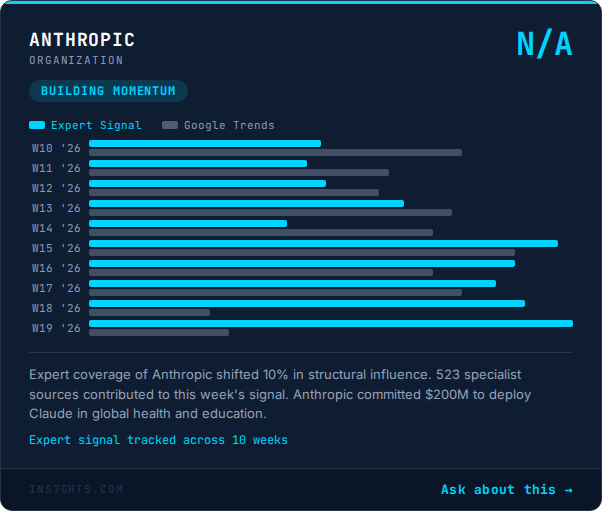
Anthropic is targeting a $30B funding round at a $900B valuation , Named late-stage round at near-trillion-dollar scale for a four-year-old company. Capital concentration in the model layer is widening, not narrowing, which means downstream procurement leverage is shrinking.
-
77% of workers report that AI has increased their workload , Named workforce-impact stat inside a government-transformation brief, against the ”AI frees up time” narrative that anchored most 2024-2025 productivity decks. The change-management line item in the AI budget is being underpriced.
-
88% of heavy AI users report burnout symptoms , Named operating-cost line that does not appear in any AI ROI model the vendor side is selling. The ”AI productivity dividend” framing is being repriced inside the workforce, not on the earnings call.
-
Allianz cut AI-driven insurance claims processing from days to minutes , Named operating result at one of the largest European insurers. The ”we will benchmark AI ROI after a 2026 pilot” CFO posture is being lapped by the named operating-floor reference.
-
See what's rising across the 190K-article corpus this week →
 Deep Dive: When The Headlines Go Quiet, The Operating Layer Speeds Up
Every DJ knows the 2am set. The headline acts have played. The crowd that came for the marquee names has thinned. The room is now the people who actually live for the music, and the booth is wide open for the working tracks: the ones that build the night, hold the floor, and prove the room. This weekend was the AI economy's 2am slot. The model lab funding rounds and the policy headlines were on a break. The operating layer played, and it had three named tracks.
The Pharma-Cloud Track
Merck signed a $1 billion multi-year AI transformation deal with Google Cloud on a Saturday, days after Bristol Myers Squibb named China as the primary discovery partner for its next pipeline. Two of the top five US biopharma names just put strategic AI bets on the table inside seven days, from two different directions: BMS on cross-border discovery, Merck on a single hyperscaler spine. The pharma CIO still answering ”we will pick a cloud after we finish the AI pilot” is going to be answering a much harder question in two quarters: why our top two competitors named their strategic partner on the same weekend and we did not.
The Capital-Markets Track
IREN closed a $3 billion convertible notes offering so a Bitcoin miner can fund the pivot into AI infrastructure. The convertible structure tells the equity market the upside is in AI demand. The $3B size tells the debt market that long-tenor GPU revenue absorbs the supply. The ”neocloud market is hyperscalers plus CoreWeave” procurement framing that some CIOs still carry into the next renewal is being priced for retirement by underwriters that just sold $3B of AI-infra paper to public markets. By the time the procurement scorecard catches up, the cost curve has moved.
The Operating-Floor Track
Freshworks shipped agentic IT operations into Freshservice and Emerson rolled out AspenTech AVA for industrial workloads on the same weekend. Two different stacks (mid-market IT ops and heavy industrial process), both naming the agent layer as the live surface, both shipped while the model labs were busy debating valuations. The head of IT or COO still waiting for ”the right time to start the AI strategy” is reading from a 2024 calendar. The agent and industrial layers are already shipping inside existing renewals.
What Actually Works
-
Build a named hyperscaler-anchored AI strategy per regulated R&D and operations lane. Every major lane gets a named cloud partner, a named workload list, a billion-dollar-class scope estimate, and a multi-year horizon before the next budget. Merck priced the pharma reference for you on Saturday.
-
Put a named non-hyperscaler GPU quote per top AI workload on the procurement file. Every GPU-heavy workload gets a named alternative-supplier quote, a cost-per-GPU-hour line, and a power-availability commitment. IREN priced the neocloud capital reference for you on Sunday.
-
Map the agentic capability sitting inside every existing IT operations and customer-experience renewal. Every mid-market vendor renewal gets a named agent-capability assessment and a renewal-leverage line. Freshworks priced the mid-market reference for you over the weekend.
-
Land a named industrial-AI pilot per high-margin physical workflow. Every plant, refinery, or process line gets a named industrial-AI platform assessment with a named operating-floor pilot. Emerson and AspenTech priced the industrial reference for you.
The Monday morning headline will eventually come back. The booth is still open. The operator who waits for the headline track while the working stack is carrying the room is going to play to a thinner floor by Q3. The one who pulls these four tracks onto the operating dashboard before the next architecture review is the one mixing for the rest of the cycle.
 What's Coming
The First Named Top-5 US Pharma With A Hyperscaler-Anchored AI Operating Plan In Earnings Disclosure
Merck's $1B Google Cloud deal is the trigger. The next move is the first top-5 US pharma formally disclosing a hyperscaler-anchored AI operating plan in an earnings call, with a named cloud partner, a named workload list, and a named cost-and-ROI line. That filing is probably one to two cycles out, and the CIOs who already drafted a hyperscaler-AI strategy absorb it as routine.
The First Named Public Issuer Outside The Bitcoin-Mining Adjacency Raising AI-Infra Convertibles At Scale
IREN's $3 billion convertible round is the trigger. The next move is the first non-mining named public issuer raising AI-infra convertibles at scale, signalling the supplier-financing thesis is no longer crypto-adjacent. That issuance is probably one to two cycles out, and the CFOs who already named a non-hyperscaler GPU partner absorb the move as routine procurement diversification.
The First Named Regulator Issuing AI-Audit-Trail Guidance For Regulated Professions
The audit firms' AI embedding under regulatory pressure is the trigger. The next move is the first named regulator (likely PCAOB, SEC, or a comparable European body) publishing formal AI-audit-trail guidance for regulated professions, naming the audit-trail, human-review, and disclosure obligations the Big Four are already wiring up. That guidance is probably one to two cycles out, and the GCs who already drafted a regulator-ready AI deployment file absorb it as routine.
 For Your Team
Strategic purpose: Monday is the day this weekend's pharma-cloud, capital-markets, and operating-floor signals get translated into one Operating-Layer Map before the next architecture review. The work is one named owner per load-bearing line: the hyperscaler-anchored AI strategy, the non-hyperscaler GPU quote, the mid-market agent capability inside existing renewals, the industrial-AI pilot, the regulator-ready audit-trail file. Everything else is commentary.
Monday's meeting prompt: ”If Merck just signed a $1B AI deal with Google Cloud on Saturday, if IREN raised $3B in convertibles to become an AI landlord on Sunday, if Freshworks and Emerson both shipped agent and industrial AI stacks the same weekend, and if the Big Four are quietly embedding AI into the audit workflow under regulator pressure, who in this room owns the named scorecard across our top three operating workflows, and is that owner one person, or five people who have never been in the same room?”
The Sunday-Stack Framework:
-
One named owner per load-bearing line. CIO and head of R&D co-own the hyperscaler-anchored AI strategy. CFO and head of platform co-own the non-hyperscaler GPU quote. CIO and head of IT operations co-own the mid-market agent capability map. COO and head of operations co-own the industrial-AI pilot. CFO, GC, and chief compliance officer co-own the regulator-ready AI audit-trail file.
-
Named hyperscaler-anchored AI strategy per regulated R&D or operations lane. Every major lane gets a named cloud partner, a named workload list, a billion-dollar-class scope estimate, and a multi-year horizon. Merck priced the pharma reference for you on Saturday.
-
Named non-hyperscaler GPU quote per top AI workload. Every GPU-heavy workload gets a named alternative-supplier quote, a cost-per-GPU-hour line, and a power-availability commitment. IREN priced the neocloud capital reference for you on Sunday.
-
Named mid-market agent capability map per existing IT operations and CX renewal. Every mid-market vendor renewal gets a named agent-capability assessment and a renewal-leverage line. Freshworks priced the mid-market reference for you over the weekend.
-
Named industrial-AI pilot per high-margin physical workflow. Every plant, refinery, or process line gets a named platform assessment with a named operating-floor pilot. Emerson and AspenTech priced the industrial reference for you.
Share-worthy stat: 77% of workers say AI has increased their workload, and 88% of heavy AI users report burnout symptoms, per the government-transformation report. Drop those two numbers on the next AI strategy review and the ”AI is a productivity dividend” framing reframes itself in 30 seconds.
Go deeper: Track the pharma-cloud, neocloud capital, and operating-floor signals in real time →
 The Track of the Day
”The most dangerous place for a senior leader to stand in 2026 is at the edge of a transformation they think is still coming.”
, from ”The Agentic Enterprise Is Already Here,” May 16
Today's set: ”Sunday Morning” by Maroon 5, cued at the 2am slot when the headline acts have left the booth and the working stack is carrying the room. The model lab funding round was loud this week. The pharma-cloud cheque, the neocloud convertible, the agentic IT ops release, the industrial AI platform, and the audit-firm regulator workflow were the tracks that actually moved the floor. The operator who waits for the headline track while the operating layer keeps shipping is going to play to a thinner room by Q3. The one who walks into Monday with the Sunday-stack on the dashboard is headlining the rest of the cycle.
Yves Mulkers, your data DJ, mixing 190,000 articles into the tracks that actually matter.
We scanned 190,000 articles this week so you don't have to. Data Pains → Business Gains.
Published: May 17, 2026 | Curated by Yves Mulkers @ Ins7ghts
1,300+ articles scanned. 7 stories selected. Our AI distills the noise into signal—in seconds. Get early access →
Know someone who'd find this useful? Share your unique referral link →
Want Your Own AI Intelligence Briefing?
Our platform analyzes 1,000+ sources daily and delivers personalized insights in seconds.
Join the Waitlist →Founding members: Lifetime discount • Priority access • Shape the product